
Florals
Look closely at one of these blooms and you can see how it was built. A flower opens at the centre, a stem curves away from it, and a second curve answers the first so the two halves mirror each other. That balance is the heart of the woodland floral style, the flowers and trailing vines that Ojibwe makers in the east have been working for generations.
It started in beadwork. Roses, leaves, berries and curling vines worked in tiny glass beads, often on a dark ground, and more often than not the real plants growing around the door rather than shapes someone made up. The look reads soft and flowing, but it is built on a grid. Each bead sits in a row, and the gentle curve of a vine is really a run of small straight stitches lining up to fool the eye. The symmetry came from counting beads on both sides until the halves matched.


There is an old habit in this work worth knowing. A beadworker would slip in a single bead of the wrong colour on purpose, a small break in the pattern, a reminder that the maker is human and the work need not come out flawless.
You can carry a bit of that ease with you. A flower does not have to be tidy to be loved.
In the Florals collection
5 of 5 pieces by Indigenous artists
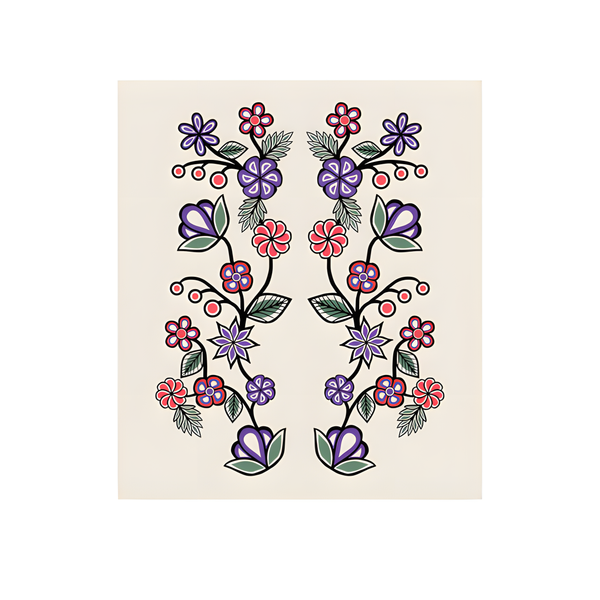
Eco Cloths - Ojibwe Florals
$6.00
Sold out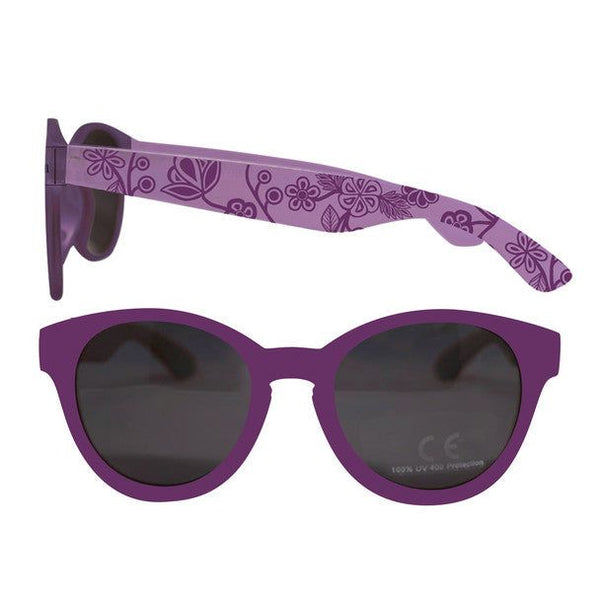
Women's Sunglasses (Owl Frames) - Ojibwe Florals
$22.00
Sold out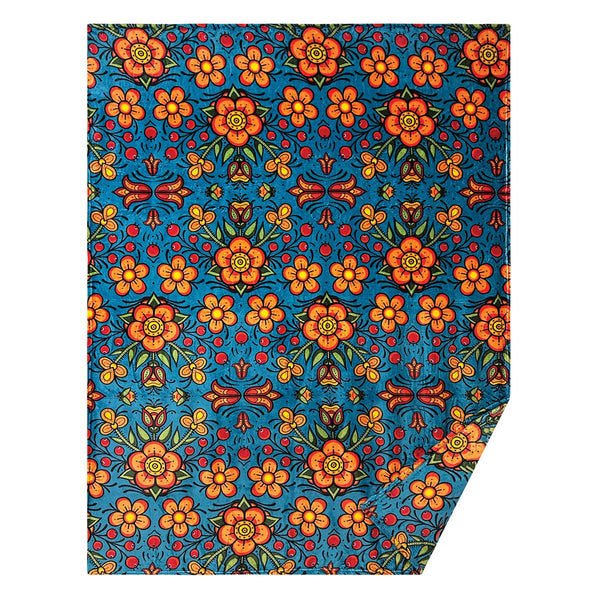
Fleece Blanket - Prairie Beadwork
$35.00
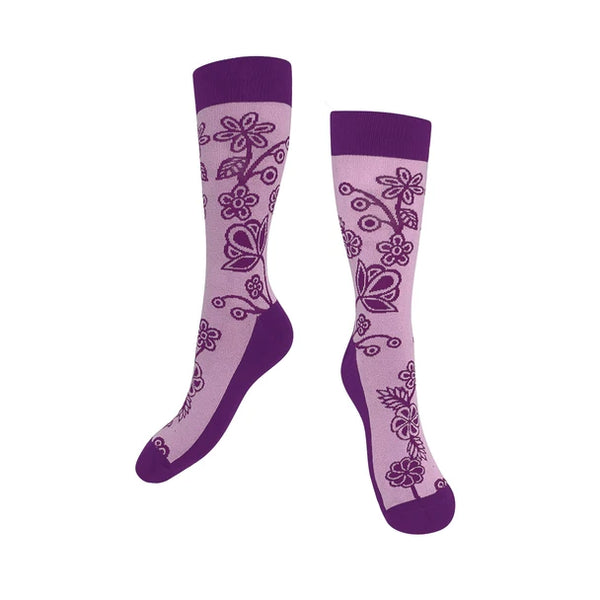
Art Socks - Ojibwe Florals
$18.99
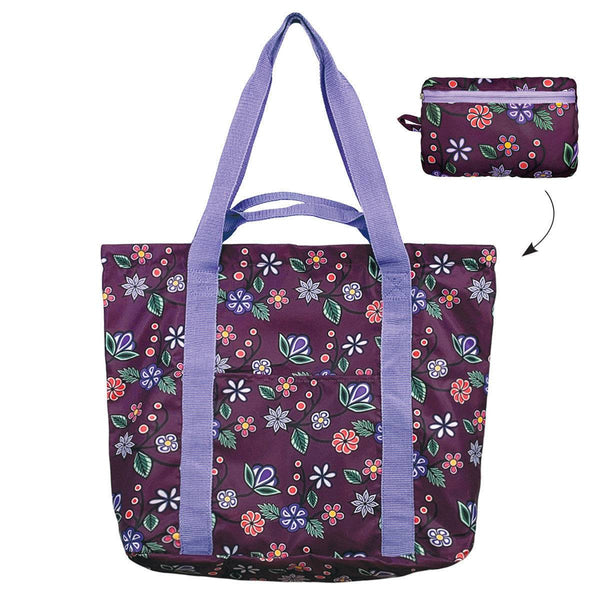
Ojibwe Florals - Packable Tote Bag
$33.99
No products match these filters. to see everything.